
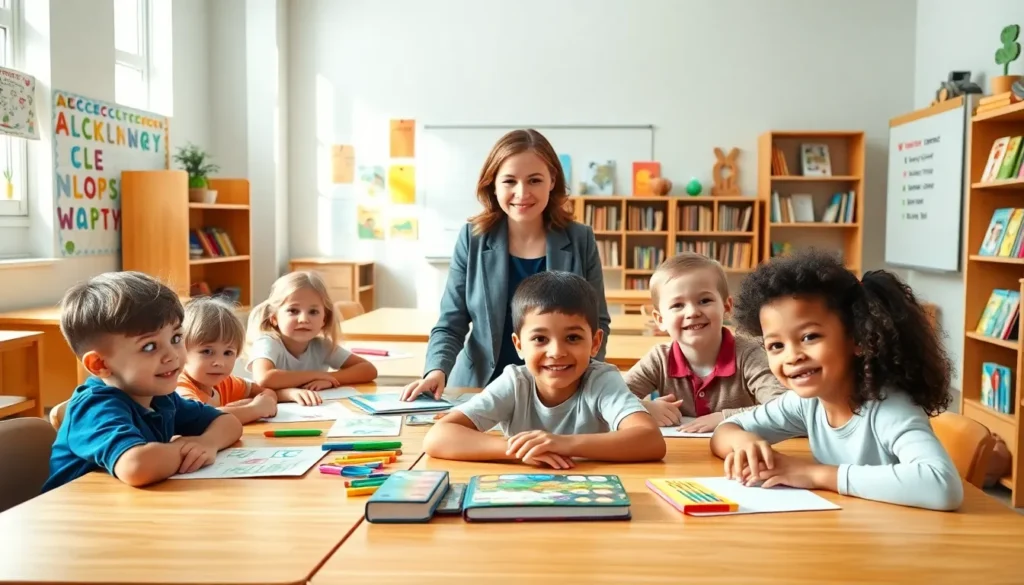

The best elementary years shape how children learn, grow, and see themselves for decades to come. These foundational school years, typically kindergarten through fifth or sixth grade, build the academic skills, social abilities, and emotional resilience that students carry into adulthood. Parents who understand what makes elementary school so important can take active steps to support their children during this critical time. This guide explores why these years matter, what developmental milestones to expect, and practical ways families can help children thrive both inside and outside the classroom.
Table of Contents
ToggleKey Takeaways
- The best elementary years build foundational academic, social, and emotional skills that shape children’s success for decades.
- Students who develop strong reading skills by third grade are significantly more likely to graduate high school and pursue higher education.
- Consistent routines, shared reading, and regular teacher communication are practical ways parents can support their child’s elementary success.
- Executive function skills like focus, organization, and time management learned during elementary school prove as valuable as academic content.
- Balance structured learning with unstructured play—the best elementary years include joy, exploration, and time for creativity.
- Celebrate effort over achievement and respond to struggles with compassion to build resilience and a positive attitude toward learning.
Why the Elementary Years Matter for Lifelong Learning
The elementary years establish patterns that persist throughout a child’s educational journey. Research consistently shows that students who develop strong reading skills by third grade are significantly more likely to graduate high school and pursue higher education. These early grades create the foundation for everything that follows.
During elementary school, children form their core attitudes toward learning itself. A child who feels successful and engaged during these years tends to approach future challenges with confidence. Conversely, students who struggle without adequate support may develop negative associations with school that become difficult to reverse.
The best elementary years also build essential executive function skills. Children learn how to focus attention, follow multi-step directions, organize materials, and manage time. These abilities prove just as valuable as academic content, perhaps more so. A student who can plan, prioritize, and persist through difficulty will succeed across subjects and settings.
Social development during elementary school carries equal weight. Children learn cooperation, conflict resolution, and empathy through daily interactions with peers and teachers. They discover how to work in groups, advocate for themselves, and respect different perspectives. These interpersonal skills become the basis for professional and personal relationships later in life.
The best elementary years don’t happen by accident. They require intentional effort from educators and families working together to create environments where children feel safe, challenged, and valued.
Key Developmental Milestones During Elementary School
Children progress through predictable developmental stages during elementary school, though individual timelines vary. Understanding these milestones helps parents recognize both progress and potential concerns.
Academic Milestones
In early elementary grades (K-2), children transition from learning to read to reading to learn. They master letter sounds, sight words, and basic comprehension strategies. Math skills progress from counting and number recognition to addition, subtraction, and place value concepts.
By mid-elementary (grades 3-4), students read chapter books independently and write organized paragraphs. They tackle multiplication, division, and fractions. Science and social studies become distinct subjects with their own vocabulary and concepts.
Upper elementary students (grades 5-6) analyze texts, support arguments with evidence, and produce multi-paragraph essays. Math extends to decimals, percentages, and pre-algebraic thinking. Students conduct research projects and present findings to classmates.
Social and Emotional Milestones
The best elementary years see children develop genuine friendships based on shared interests rather than proximity alone. They learn to handle disappointment, celebrate others’ successes, and recover from social setbacks.
Emotional regulation improves dramatically during these years. A kindergartener who melts down over small frustrations becomes a fifth-grader who can identify emotions, use coping strategies, and seek help appropriately.
Children also develop moral reasoning during elementary school. They move from following rules to avoid punishment toward understanding fairness, justice, and the impact of their choices on others.
How Parents Can Support Success in Elementary School
Parents play a crucial role in making these the best elementary years possible. Their involvement doesn’t require extensive time or resources, consistency and genuine engagement matter more than grand gestures.
Establish Routines That Work
Children thrive with predictable schedules. A consistent bedtime ensures adequate sleep for learning and emotional regulation. Morning routines reduce stress and tardiness. After-school time blocks assignments, play, and family connection in manageable chunks.
Routines shouldn’t feel rigid or punitive. The goal is creating structure that frees children to focus on growth rather than wondering what happens next.
Read Together, Even After They Can Read Alone
Reading aloud remains valuable throughout the elementary years. Shared reading builds vocabulary, exposes children to complex sentence structures, and creates space for meaningful conversations. Ask questions about characters’ motivations, predict outcomes together, and connect stories to real-life experiences.
Communicate With Teachers
Regular communication with teachers helps parents understand classroom expectations and address concerns early. Attend conferences, respond to notes home, and ask specific questions: “What skill should we practice this week?” or “How can we reinforce this concept at home?”
Teachers appreciate parents who approach them as partners rather than critics. This collaborative relationship benefits children directly.
Foster Independence
The best elementary years prepare children for increasing responsibility. Let them pack their own backpacks, manage assignments schedules (with guidance), and solve minor problems independently. Resist the urge to rescue them from every difficulty, productive struggle builds resilience and problem-solving skills.
Creating Positive Memories and Experiences
Academic success matters, but the best elementary years also include joy, wonder, and belonging. Children remember how they felt during this period long after they forget specific lessons.
Celebrate effort, not just achievement. Praise the hard work behind a good grade rather than natural ability. This approach encourages children to embrace challenges rather than avoid risks that might expose limitations.
Create traditions around school milestones. First-day photos, end-of-year celebrations, and acknowledgment of personal bests give children anchors of positive association with their educational journey.
Encourage exploration beyond academics. Sports, music, art, drama, coding clubs, extracurricular activities help children discover passions, develop new skills, and form friendships with peers who share their interests. Not every activity needs to build a college resume. Sometimes kids just need to try things and have fun.
Protect unstructured time. Over-scheduling robs children of opportunities for imaginative play, boredom-driven creativity, and simple rest. The best elementary years include afternoons spent building forts, inventing games, and daydreaming.
Address struggles with compassion. When children face academic challenges or social difficulties, respond with support rather than disappointment. Work with teachers to identify solutions. Remind children that setbacks don’t define them, growth comes through difficulty, not around it.


