
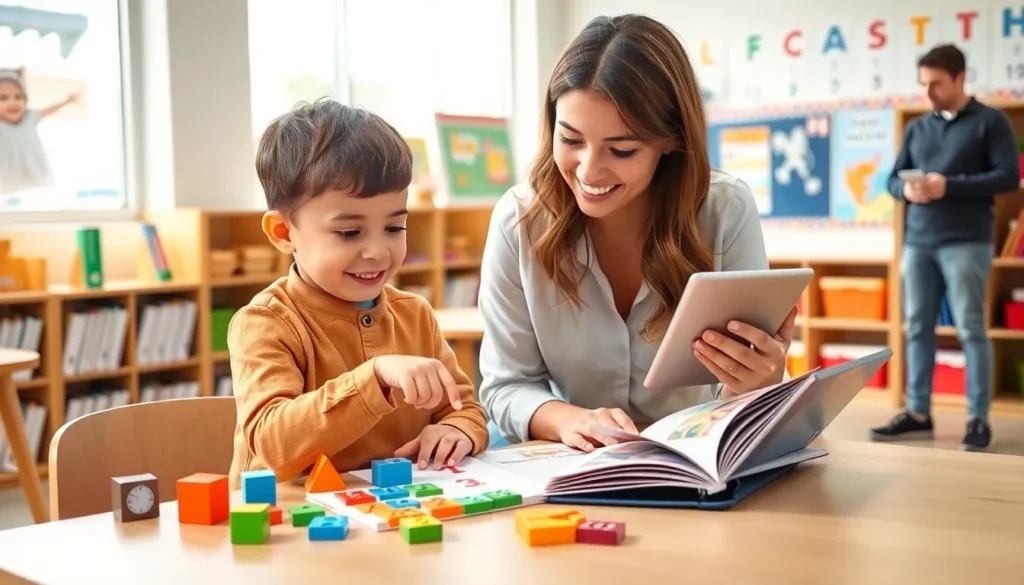

The elementary years for beginners can feel overwhelming for parents. Children ages five through eleven experience rapid growth in reading, math, and social skills. This guide breaks down what parents need to know about early education. It covers developmental milestones, grade-level expectations, and practical ways to support learning at home. Parents will also find solutions to common challenges that arise during the elementary years for beginners. Whether a child is entering kindergarten or transitioning to upper elementary grades, this information helps families prepare for success.
Table of Contents
ToggleKey Takeaways
- The elementary years for beginners span kindergarten through fifth or sixth grade (ages 5–12) and build the foundation for all future learning.
- Children progress through key developmental milestones in physical coordination, cognitive thinking, social skills, and emotional regulation during these years.
- Reading daily for at least 20 minutes and creating a consistent homework routine are two of the most effective ways parents can support learning at home.
- Third grade marks a critical shift where students move from learning to read to reading to learn, making early reading support essential.
- Common challenges like reading difficulties, math anxiety, and social conflicts can be addressed through early intervention and open communication with teachers.
- Limiting screen time to 1–2 hours daily and encouraging physical activity helps children focus better during the elementary years for beginners.
What Are the Elementary Years?
The elementary years span from kindergarten through fifth or sixth grade, depending on the school district. Most children begin elementary school around age five and complete it by age eleven or twelve. These years form the foundation for all future learning.
During the elementary years for beginners, children learn fundamental skills. They master reading, writing, and basic mathematics. They also develop critical thinking abilities and begin to understand science and social studies concepts.
Elementary education typically follows a structured curriculum. Teachers introduce new concepts gradually, building on previous knowledge. A first-grader learns to add single digits. By fifth grade, that same student works with fractions and decimals.
Social development happens alongside academic growth. Children learn to work in groups, follow rules, and build friendships. They develop emotional regulation skills and begin to understand different perspectives. The elementary years for beginners set the stage for both intellectual and personal growth.
Key Developmental Milestones During Elementary School
Children hit important milestones throughout the elementary years. Parents should understand what typical development looks like at each stage.
Physically, elementary-aged children gain coordination and strength. Fine motor skills improve, making handwriting easier. Gross motor skills develop through running, jumping, and sports.
Cognitively, children move from concrete to more abstract thinking. Younger students need hands-on activities to understand concepts. Older elementary students can work with ideas and theories more easily.
Socially, children form closer friendships as they progress through the elementary years for beginners. They become more aware of social dynamics and peer opinions. By fourth or fifth grade, friendships often become central to a child’s daily experience.
Emotionally, children develop better self-control over time. They learn to manage frustration, handle disappointment, and celebrate achievements appropriately. Parents can expect some emotional ups and downs as children grow.
Academic Expectations by Grade Level
Kindergarten focuses on letter recognition, counting to 100, and basic social skills. Children learn to follow classroom routines and work independently for short periods.
First and second grade build reading fluency. Students read simple chapter books by the end of second grade. Math instruction covers addition, subtraction, and place value concepts.
Third grade marks a shift. Students transition from learning to read to reading to learn. They tackle multiplication and division. State testing often begins in third grade.
Fourth and fifth grade introduce more complex material. Students write multi-paragraph essays and analyze texts. Math includes fractions, decimals, and early algebraic thinking. Science and social studies require more research and critical analysis.
The elementary years for beginners progress steadily. Each grade builds on skills from the previous year. Parents should expect gradual increases in assignments and academic demands.
How to Support Your Child’s Learning at Home
Parents play a vital role during the elementary years. Home support strengthens what children learn at school.
Reading together makes a significant difference. Parents should read aloud to young children daily. Older elementary students benefit from independent reading time. Aim for at least twenty minutes of reading each day.
Create a assignments routine. Set a consistent time and quiet place for schoolwork. Remove distractions like television and video games during study time. Stay available to answer questions without doing the work for them.
Talk about school regularly. Ask specific questions beyond “How was your day?” Try “What did you learn in science today?” or “Who did you play with at recess?” These conversations show children that education matters.
Math practice can happen naturally during the elementary years for beginners. Cooking involves measuring and fractions. Shopping teaches money skills. Board games build logic and counting abilities.
Limit screen time and encourage physical activity. Active children often focus better in class. The American Academy of Pediatrics recommends no more than one to two hours of recreational screen time daily for school-age children.
Stay connected with teachers. Attend parent-teacher conferences and respond to communications promptly. Teachers can identify concerns early and suggest specific ways to help at home.
Common Challenges and How to Address Them
Most families face some struggles during the elementary years for beginners. Knowing what to expect helps parents respond effectively.
Reading difficulties affect many children. Some students need extra time to decode words. Others struggle with comprehension. If a child falls behind in reading, parents should talk to the teacher immediately. Early intervention produces the best outcomes.
Math anxiety often develops in elementary school. Children who feel stressed about math may avoid it or shut down. Parents can help by staying calm about math themselves. Celebrate effort over perfection. Use games and real-world examples to make math less intimidating.
Social challenges arise throughout the elementary years. Friendships shift and conflicts happen. Teach children problem-solving skills. Role-play difficult situations at home. Contact the school if bullying or persistent social problems occur.
Assignments battles frustrate many families. Keep assignments manageable by breaking them into smaller chunks. Offer praise for completed work. If assignments consistently takes too long, speak with the teacher about adjustments.
Attention and focus issues may surface during the elementary years for beginners. Some children naturally struggle to sit still. Others may have attention disorders that require professional evaluation. Teachers can provide observations that help parents decide whether to seek additional support.
Test anxiety affects older elementary students. Teach relaxation techniques like deep breathing. Ensure children get enough sleep before tests. Remind them that one test does not define their abilities.


